 EZ Shadow
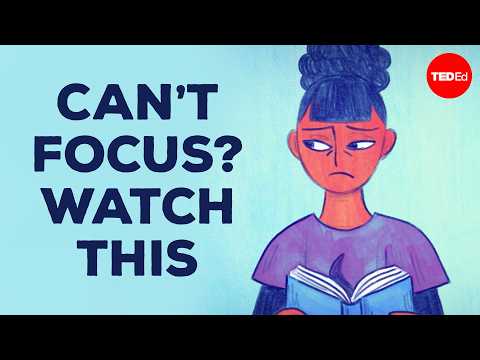
4 ways to fix your attention span - Shannon Odell
IntermediateAmerican accentAnimated lesson5 min
Shadow this video one sentence at a time: listen, say it back, and get a score for every word.
Hard words
The longest, least common words in this video. Say them slowly before you start.
- appropriately
- environmental
- fundamentally
- intentionally
- continuously
- environments
- improvements
- notification
Transcript: 45 sentences
Tap a sentence to start the drill right there.
- 0:07 In 2016, a group of researchers - oh, a new photo.
- 0:12 These researchers set out to measure - did I get that email?
- 0:15 They measured - what was that?
- 0:18 Sorry.
- 0:19 The researchers set out to measure the length of, well, our attention spans.
- 0:25 Participants downloaded a program that tracked how long they stayed focused on a single computer application before switching to another.
- 0:34 On average, users stuck with a single task for 40 seconds, down from 75 seconds, measured just five years earlier.
- 0:43 This doesn’t necessarily mean our attention spans are fundamentally getting shorter.
- 0:48 Rather, in today’s world, our attention is being pulled in more directions than ever before.
- 0:54 This can make finding focus - for work, school, and even the things we love - feel almost impossible.
- 1:02 Thankfully, there are ways we can improve and better protect our attention spans, both online and off.
- 1:09 Our brains are constantly receiving a flood of information, from sensory input to environmental cues to internal thoughts.
- 1:17 Filtering through it all relies on several brain regions.
- 1:21 The prefrontal cortex helps us decide what to pay attention to, while the parietal cortex shines a mental flashlight on that prioritized stream of information while ignoring the rest.
- 1:33 The challenge of sustained attention is keeping that flashlight focused in one place.
- 1:39 The brain is continuously monitoring all these competing signals.
- 1:42 And it redirects your focus if anything is flagged as particularly novel, unexpected, or emotionally charged - whether it’s a knock on the door, a notification, or even a passing thought.
- 1:55 This ability to constantly scan our environments and quickly refocus was key for human survival.
- 2:02 So, while frustrating, getting distracted is inevitable.
- 2:07 And our baseline ability to manage distractions can vary based on factors like genetics and brain differences.
- 2:14 But no matter your starting point, there are ways to improve your ability to stay focused.
- 2:20 First, tasks that appropriately challenge you tend to hold your attention best.
- 2:25 For example, you might focus better when working on a more difficult, intricately patterned puzzle than an easier one.
- 2:33 Of course, we don’t always have a choice in what needs to get done.
- 2:37 In these situations, it’s helpful to remember that if focusing feels like work, that's because it is.
- 2:44 In fact, some researchers theorize that attention is a limited resource.
- 2:49 When you start focusing on something, this resource is at its highest, but it depletes over time, leading to more mistakes and increasing the chance you’ll be distracted.
- 2:59 Multitasking only increases the demand for this resource, exhausting attentional stores more quickly.
- 3:06 That's why focusing on one task and intentionally building in breaks can be helpful.
- 3:11 Studies even show a momentary break, to get a snack or just zone out, can reset this attentional resource.
- 3:19 And this strategy may be extra beneficial when studying or practicing a new skill.
- 3:24 During breaks, our minds replay the neural activity patterns of what you just learned, helping to solidify the memory for the long term.
- 3:33 Speaking of studying, stress, sleepiness, and poor mood can all weaken our ability to block out distractions.
- 3:42 So activities that reduce stress, like exercising, chatting with friends, or getting a good night’s sleep, also make it easier to stay focused.
- 3:51 And nature may offer an extra boost.
- 3:54 In one study, a 15-minute walk outdoors led to greater improvements in lab-based attention tasks than the same walk indoors.
- 4:03 Another effective strategy is mindfulness meditation.
- 4:07 This practice is all about staying in the present moment through exercises like spending 12 minutes focusing on the sensations of breathing, which can help train your attention over time.
- 4:19 But before you go take a walk, grab a snack, or learn to meditate, there’s something much easier you can do right in this moment: get rid of distractions.
- 4:28 It’s impossible to remove every distraction, after all, our own wandering minds are often the biggest culprits.
- 4:36 But one recent survey estimated that Americans now check their phones around 200 times a day.
- 4:42 The distractions on our screens are designed to grab and hold attention.
- 4:47 So, remember to be kind to yourself.
- 4:50 While we can’t always control every factor that pulls at our attention, finding a quiet environment, closing extra tabs, and even blocking certain apps
- 4:59 can give your brain the best chance at focusing in.
More Intermediate videos
 Ever walk into a room and forget what you were doing? - Gabriel RadvanskyIntermediateAmerican accentAnimated lesson5 min
 4 ways to tell a great storyIntermediateAmerican accentAnimated lesson5 min
 The fastest way to board a plane, according to mathematics - Rachel YangIntermediateAmerican accentAnimated lesson6 min