 EZ Shadow
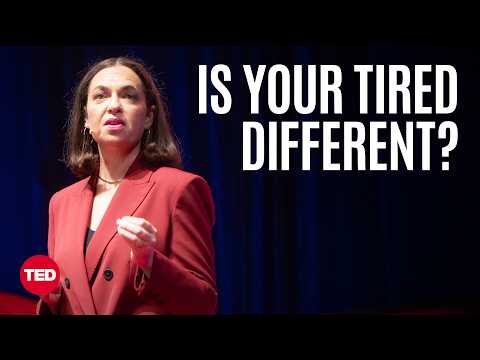
I Thought I Was Lazy. Turns Out I Had a Sleep Disorder | Lindsay Scola | TED
IntermediateAmerican accentTED talk9 min
Shadow this video one sentence at a time: listen, say it back, and get a score for every word.
Hard words
The longest, least common words in this video. Say them slowly before you start.
- extraordinarily
- hallucinations
- accelerating
- inflammation
- intervention
- overachiever
- overwhelming
- practitioner
Transcript: 102 sentences
Tap a sentence to start the drill right there.
- 0:04 I was one of those overachiever kids.
- 0:07 12 things going at once, already dreaming of changing the world.
- 0:10 And I was so excited to go to summer school at Yale when I was 16.
- 0:16 I didn't say I was cool.
- 0:19 The classes were tough and thought-provoking.
- 0:22 But that's when something strange started happening to me.
- 0:25 I'd be sitting in class, completely engaged, when suddenly, a fog rolled in.
- 0:31 My thoughts fuzzed, my senses dulled, the world blurred, like someone was slowly turning a dimmer switch on my brain.
- 0:40 I'd pinch my thigh, tap my foot, anything to fight this overwhelming urge to sleep.
- 0:45 Once I bit my tongue so hard it bled.
- 0:48 And then the thought would hit me like a hammer.
- 0:51 "If I don't go to sleep right now, I'm going to die."
- 0:56 So somehow, quietly, I'd excuse myself, slip into a bathroom stall, lean my head against the wall and fall asleep.
- 1:04 When I told my family doctor, she said, "You're busy.
- 1:06 Busy people are tired."
- 1:08 It felt dismissive, but also like some secret initiation into adulthood.
- 1:13 I had big dreams, a lot to accomplish, so I figured I just had to get better at being awake.
- 1:19 When I started working in professional politics, exhaustion was a badge of honor.
- 1:24 The later you stayed up, the more coffee you drank, the more worthy you felt.
- 1:29 Society convinced us that if we were tired, we were doing it right.
- 1:34 In 2008, I joined the Obama Advance team, the people responsible for everything from logistics to aesthetics on the campaign.
- 1:43 But the thing about Advance, you're in a new city every four to six days, regularly pulling all-nighters, on behalf of the future president of the United States.
- 1:51 The stakes were high, it was fast-paced, everyone was exhausted.
- 1:56 I was surrounded by the best, the brightest and the busiest.
- 2:02 But I never saw them sneaking into the bathroom to nap like I did.
- 2:07 I thought I must be lazy, that I lacked the willpower everyone else seemed to have.
- 2:14 And underneath all that drive, I felt utterly alone in my inability to keep up.
- 2:22 As the years passed, I kept bringing up my sleepiness to doctors who kept pushing the same glossy handouts on improving my sleep hygiene.
- 2:30 My gut knew something else was going on.
- 2:33 And then came the dreams.
- 2:35 I'd wake up frozen in bed, convinced something terrifying was in the room.
- 2:39 I could see it, but I couldn't move or scream.
- 2:42 One doctor said it was just me manifesting stress from my job.
- 2:46 One night I woke to a child whispering, "Can I hold your hand?"
- 2:53 The next day I saged my entire bedroom, like, it never crossed my mind I might have a neurological disorder.
- 3:02 At 35, I hit my wall.
- 3:05 I could fall asleep, but I couldn't stay asleep.
- 3:07 I was awake most of the night, falling back asleep just before my alarm went off.
- 3:11 Most days I felt like a lunatic zombie, barely holding it together.
- 3:15 I would drop things suddenly, in the middle of stressful meetings at work.
- 3:19 At my wit's end, I begged my general practitioner for help.
- 3:23 She ordered an at-home sleep test, which came back negative for sleep apnea.
- 3:26 And I was told, "You're fine."
- 3:28 I marched back into her office with a full defense that something else was wrong.
- 3:32 She stopped me mid-sentence and admitted, "We're officially beyond both our knowledge of sleep."
- 3:37 I was referred to a sleep specialist, which is a doctor trained to diagnose and treat sleep disorders.
- 3:44 And two months later, after 19 years of symptoms, shame and self-doubt, I was diagnosed with narcolepsy,
- 3:53 a chronic neurological condition of the brain's sleep-wake cycle.
- 3:57 And before you say, "19 years, that's extreme."
- 4:01 It's not.
- 4:02 The average diagnosis period for narcolepsy is eight to 15 years.
- 4:07 And that's because in medical schools worldwide, doctors receive, on average, less than three hours of education on sleep
- 4:18 total across their entire medical training.
- 4:22 No wonder no doctor thought my sleepiness was an issue or asked any follow-up questions.
- 4:28 Narcolepsy has five distinct symptoms that, on their own, seem completely unrelated.
- 4:33 Excessive sleepiness that can feel like you've been awake for 48 hours, even after a full night’s rest: nighttime hallucinations, sleep paralysis, disrupted sleep and sometimes cataplexy --
- 4:44 a loss of muscle tone with strong emotions.
- 4:47 Which is why I don't have slides in this talk, because I was afraid I would drop the remote.
- 4:52 I never walked into a doctor’s office and listed them all together because there was no way for me to know they belonged to the same story.
- 5:02 The same way there was no way for me to know my tired was different.
- 5:07 But for one in five of us, our tired is different.
- 5:11 While narcolepsy might be rare, it’s estimated 20 percent of the population has a sleep disorder -- everything from sleep apnea to chronic insomnia, restless leg syndrome and other conditions that quietly steal rest.
- 5:23 And hundreds of millions of people worldwide are walking around exhausted, untreated and thinking it’s normal to feel this way.
- 5:32 We've been taught to push through exhaustion instead of asking about it.
- 5:37 This isn't an epidemic of laziness.
- 5:40 It's a failure of diagnosis.
- 5:43 We dismiss people with sleep disorders all the time.
- 5:46 We think sleep apnea only affects middle-aged men with thick necks and square jaws.
- 5:51 But it can affect anyone, at any age and any size.
- 5:55 Now, thankfully, we've started to recognize that sleep is vital.
- 5:59 One of the most important things you can do for your physical or mental health.
- 6:03 When you get enough sleep, your body performs quiet miracles.
- 6:07 Repairing cells, balancing hormones, clearing toxins from your brain.
- 6:11 Sleep is where creativity is born, memories are filed and the subconscious gets to color outside the lines.
- 6:18 Sleep is the engine of productivity.
- 6:21 Now good sleep hygiene matters.
- 6:23 But for the one in five of us living with a sleep disorder, sleep hygiene alone isn't a cure.
- 6:29 No perfect bedtime routine, no weighted blanket, no lavender spray on your pillow will keep your airway open at night.
- 6:36 Because when the problem is neurological, structural or biochemical, without medical intervention, your body pays the price.
- 6:44 Aside from brain fog, loss of productivity and the dangers of drowsy driving, over time, when sleep disorders go undiagnosed, they silently break the body down from the inside out,
- 6:56 fueling inflammation, accelerating aging, driving insulin resistance and raising the risk of heart attack, stroke even Alzheimer’s.
- 7:05 This isn't just exhaustion.
- 7:08 It’s a slow erosion of health, focus and longevity.
- 7:14 But it's also an identity issue.
- 7:16 I didn't become a whole person until I was diagnosed with narcolepsy.
- 7:20 Before that, I was working or sleeping.
- 7:22 There was nothing in between.
- 7:24 But with treatment, the world came alive to me.
- 7:27 Colors got brighter, I felt a full range of emotions.
- 7:31 I started having hobbies.
- 7:35 I found my voice.
- 7:38 Before my narcolepsy diagnosis, I didn't think I was creative.
- 7:42 In the last eight years of treatment, I've written two pilot scripts, and published a whole book, became a keynote speaker and had articles published in national outlets.
- 7:53 Before my diagnosis, my world felt extraordinarily limited.
- 7:59 Now there's no limit to my capacity.
- 8:02 So consider this your activation, your permission slip, your reclamation, your literal wake-up call to question not just your sleep,
- 8:13 but how you feel during the day.
- 8:16 If something is off, ask for help, demand answers, see a sleep specialist.
- 8:22 Not just for your health, but for the idea, the project, the relationship, the version of you that's waiting to wake up.
- 8:31 Because I want you to live your biggest, most beautiful life -- full of color, curiosity and awe.
- 8:39 Wild and wide awake.
- 8:43 So I'm asking you, is your tired different?
More Intermediate videos
 How Imaginary Worlds Help Kids Learn | Anna Rainio | TEDIntermediateFinnish English accentTED talk12 min
 How to Make Stress Your Friend - TEDIntermediateAmerican accentTED talk14 min
 Why I Hate Being Japanese - Lit NomadIntermediateJapanese English accentSelf talk14 min