 EZ Shadow
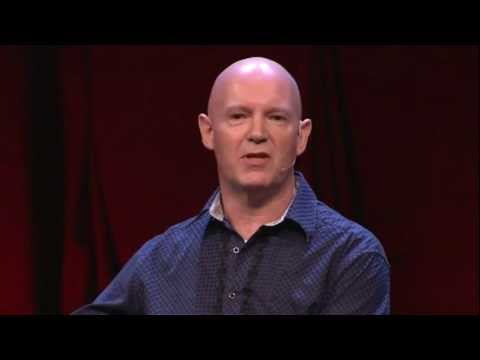
5 ways to listen better | Julian Treasure | TED
BeginnerBritish accentTED talk8 min
Shadow this video one sentence at a time: listen, say it back, and get a score for every word.
Hard words
The longest, least common words in this video. Say them slowly before you start.
- contemplation
- reverberation
- communication
- understanding
- broadcasting
- desensitized
- relationship
- conversation
Transcript: 101 sentences
Tap a sentence to start the drill right there.
- 0:16 We are losing our listening.
- 0:19 We spend roughly 60 percent of our communication time listening, but we're not very good at it.
- 0:24 We retain just 25 percent of what we hear.
- 0:27 Now -- not you, not this talk, but that is generally true.
- 0:31 Let's define listening as making meaning from sound.
- 0:35 It's a mental process, and it's a process of extraction.
- 0:39 We use some pretty cool techniques to do this.
- 0:41 One of them is pattern recognition.
- 0:43 So in a cocktail party like this, if I say, "David, Sara, pay attention" -- some of you just sat up.
- 0:50 We recognize patterns to distinguish noise from signal, and especially our name.
- 0:55 Differencing is another technique we use.
- 0:58 If I left this pink noise on for more than a couple of minutes, you would literally cease to hear it.
- 1:03 We listen to differences; we discount sounds that remain the same.
- 1:08 And then there is a whole range of filters.
- 1:11 These filters take us from all sound down to what we pay attention to.
- 1:16 Most people are entirely unconscious of these filters.
- 1:20 But they actually create our reality in a way, because they tell us what we're paying attention to right now.
- 1:25 I'll give you one example of that.
- 1:27 Intention is very important in sound, in listening.
- 1:30 When I married my wife, I promised her I would listen to her every day as if for the first time.
- 1:37 Now that's something I fall short of on a daily basis.
- 1:42 But it's a great intention to have in a relationship.
- 1:46 But that's not all.
- 1:47 Sound places us in space and in time.
- 1:50 If you close your eyes right now in this room, you're aware of the size of the room from the reverberation and the bouncing of the sound off the surfaces; you're aware of how many people are around you,
- 2:01 because of the micro-noises you're receiving.
- 2:04 And sound places us in time as well, because sound always has time embedded in it.
- 2:10 In fact, I would suggest that our listening is the main way that we experience the flow of time from past to future.
- 2:17 So, "Sonority is time and meaning" -- a great quote.
- 2:20 I said at the beginning, we're losing our listening.
- 2:22 Why did I say that?
- 2:24 Well, there are a lot of reasons for this.
- 2:26 First of all, we invented ways of recording -- first writing, then audio recording and now video recording as well.
- 2:32 The premium on accurate and careful listening has simply disappeared.
- 2:37 Secondly, the world is now so noisy, with this cacophony going on visually and auditorily, it's just hard to listen; it's tiring to listen.
- 2:48 Many people take refuge in headphones, but they turn big, public spaces like this, shared soundscapes, into millions of tiny, little personal sound bubbles.
- 3:00 In this scenario, nobody's listening to anybody.
- 3:03 We're becoming impatient.
- 3:05 We don't want oratory anymore; we want sound bites.
- 3:08 And the art of conversation is being replaced -- dangerously, I think -- by personal broadcasting.
- 3:15 I don't know how much listening there is in this conversation, which is sadly very common, especially in the UK.
- 3:22 We're becoming desensitized.
- 3:23 Our media have to scream at us with these kinds of headlines in order to get our attention.
- 3:29 And that means it's harder for us to pay attention to the quiet, the subtle, the understated.
- 3:36 This is a serious problem that we're losing our listening.
- 3:39 This is not trivial, because listening is our access to understanding.
- 3:44 Conscious listening always creates understanding, and only without conscious listening can these things happen.
- 3:52 A world where we don't listen to each other at all is a very scary place indeed.
- 3:59 So I'd like to share with you five simple exercises, tools you can take away with you, to improve your own conscious listening.
- 4:06 Would you like that?
- 4:07 Audience: Yes!
- 4:09 Good.
- 4:09 The first one is silence.
- 4:12 Just three minutes a day of silence is a wonderful exercise to reset your ears and to recalibrate, so that you can hear the quiet again.
- 4:20 If you can't get absolute silence, go for quiet, that's absolutely fine.
- 4:25 Second, I call this "the mixer."
- 4:28 So even if you're in a noisy environment like this -- and we all spend a lot of time in places like this -- listen in the coffee bar to how many channels of sound can I hear?
- 4:38 How many individual channels in that mix am I listening to?
- 4:41 You can do it in a beautiful place as well, like in a lake.
- 4:44 How many birds am I hearing?
- 4:46 Where are they?
- 4:47 Where are those ripples?
- 4:48 It's a great exercise for improving the quality of your listening.
- 4:52 Third, this exercise I call "savoring," and this is a beautiful exercise.
- 4:56 It's about enjoying mundane sounds.
- 4:58 This, for example, is my tumble dryer.
- 5:03 It's a waltz -- one, two, three; one, two, three; one, two, three.
- 5:07 I love it!
- 5:08 Or just try this one on for size.
- 5:20 Wow!
- 5:21 So, mundane sounds can be really interesting -- if you pay attention.
- 5:25 I call that the "hidden choir" -- it's around us all the time.
- 5:28 The next exercise is probably the most important of all of these, if you just take one thing away.
- 5:34 This is listening positions -- the idea that you can move your listening position to what's appropriate to what you're listening to.
- 5:42 This is playing with those filters.
- 5:44 Remember I gave you those filters?
- 5:45 It's starting to play with them as levers, to get conscious about them and to move to different places.
- 5:50 These are just some of the listening positions, or scales of listening positions, that you can use.
- 5:55 There are many.
- 5:56 Have fun with that.
- 5:57 It's very exciting.
- 5:59 And finally, an acronym.
- 6:01 You can use this in listening, in communication.
- 6:04 If you're in any one of those roles -- and I think that probably is everybody who's listening to this talk -- the acronym is RASA, which is the Sanskrit word for "juice" or "essence."
- 6:15 And RASA stands for "Receive," which means pay attention to the person; "Appreciate," making little noises like "hmm," "oh," "OK"; "Summarize" -- the word "so" is very important in communication;
- 6:27 and "Ask," ask questions afterwards.
- 6:30 Now sound is my passion, it's my life.
- 6:33 I wrote a whole book about it.
- 6:34 So I live to listen.
- 6:35 That's too much to ask for most people.
- 6:38 But I believe that every human being needs to listen consciously in order to live fully -- connected in space and in time to the physical world around us,
- 6:48 connected in understanding to each other, not to mention spiritually connected, because every spiritual path I know of has listening and contemplation at its heart.
- 6:58 That's why we need to teach listening in our schools as a skill.
- 7:04 Why is it not taught?
- 7:05 It's crazy.
- 7:06 And if we can teach listening in our schools, we can take our listening off that slippery slope to that dangerous, scary world that I talked about, and move it to a place where everybody is consciously listening all the time,
- 7:18 or at least capable of doing it.
- 7:20 Now, I don't know how to do that, but this is TED, and I think the TED community is capable of anything.
- 7:27 So I invite you to connect with me, connect with each other, take this mission out.
- 7:31 And let's get listening taught in schools, and transform the world in one generation to a conscious, listening world -- a world of connection, a world of understanding and a world of peace.
- 7:41 Thank you for listening to me today.
More Beginner videos
 Why sitting is bad for you - Murat DalkilinçBeginnerAmerican accentAnimated lesson5 min
 How the food you eat affects your brain - Mia NacamulliBeginnerAmerican accentAnimated lesson5 min
 What would happen if you didn’t sleep? - Claudia AguirreBeginnerAmerican accentAnimated lesson4 min